01
Earlier Regression Signals
Automated checks catch many repeatable failures before a release decision is made.
Rigorous automated and manual QA engineering that catches critical bugs before they ever reach your users.
Quality work combines prevention, fast feedback, and thoughtful exploration. We select unit, integration, end-to-end, accessibility, compatibility, and load checks according to the product's important risks, and connect the appropriate automated checks to the delivery workflow.
A useful engagement connects product intent, engineering choices, quality controls, and operational ownership instead of treating implementation as an isolated hand-off.
Automated checks catch many repeatable failures before a release decision is made.
A balanced test strategy provides faster feedback around critical workflows and integration contracts.
Prevent embarrassing bugs, crashes, or security flaws from reaching the public.
Architecture boundaries, integration behavior, security assumptions, and release choices are recorded with their trade-offs.
Documentation, monitoring, access, deployment controls, and next-release priorities are prepared around the operating team.
The first useful step depends on what is already known, what is already running, and which risk needs to be reduced first.
Map your starting pointQuality work combines prevention, fast feedback, and thoughtful exploration. We select unit, integration, end-to-end, accessibility, compatibility, and load checks according to the product's important risks, and connect the appropriate automated checks to the delivery workflow.
Best fit when
The outcome matters, but scope, dependencies, or the implementation boundary are still uncertain.
Useful outputs
Work proceeds in testable increments that connect interface quality, system behavior, integrations, security, and release readiness.
Best fit when
The direction is understood and you need an accountable path from design through production.
Useful outputs
Use evidence from the live product to prioritize performance, reliability, usability, security, and operating improvements in a controlled sequence.
Best fit when
The current system has value, but specific constraints are slowing users, delivery, or growth.
Useful outputs
What we deliver for QA & Testing.
Simulating real user interactions across the entire stack using Cypress or Playwright.
Automated validation of API endpoints, payloads, and response times.
Using tools like k6 or JMeter to simulate thousands of concurrent users and identify breaking points.
Verifying responsive layouts and native app performance on physical mobile devices.
Automated pixel-by-pixel comparisons to catch unintended CSS or layout changes.
The delivery path
How we build scalable solutions from concept to deployment.
Defining the testing pyramid and selecting the appropriate tools for the tech stack.
Writing comprehensive BDD (Behavior-Driven Development) test scenarios.
Writing the test scripts and integrating them into the CI/CD pipeline.
Running suites, identifying failures, and providing detailed bug reports to developers.
Updating test suites as the application evolves to prevent test rot.
Common questions about our QA & Testing services.
Yes, but we calibrate it. For an MVP, we focus on high-value end-to-end tests for critical user flows (like checkout or signup) rather than striving for 100% unit test coverage, balancing speed with stability.
Beyond implementation
Map the people, records, approvals, exceptions, and systems involved before selecting the solution boundary.
Document data ownership, integrations, access, failure handling, deployment, and the trade-offs the team accepts.
Plan validation, rollout, documentation, support, and how the client team will operate the solution after launch.
From the field
Practical notes on modernization, architecture, automation, delivery, and maintainable software systems.
 Product Strategy
A comprehensive master handbook for Product Managers, CTOs, and Founders detailing product discovery cycles, PRDs, RICE scoring, user research, product-led growth (PLG), and agile sprint velocity.
Read article Cyber Security
A comprehensive 5,000+ word technical guide covering OWASP Top 10 mitigations, zero-trust JWT/OAuth auth pipelines, BOLA RBAC guards, Docker/Kubernetes container security, and SOC 2 / ISO 27001 compliance.
Read article Product Strategy
Product Manager Rohit Sharma outlines strategic frameworks for product discovery, PRD authoring, RICE prioritization, and driving high-velocity engineering delivery.
Read article Product Strategy
How Product Manager Rohit Sharma conducts user research, defines key SaaS metrics (MRR, Churn, LTV/CAC), and aligns engineering roadmaps with business growth.
Read article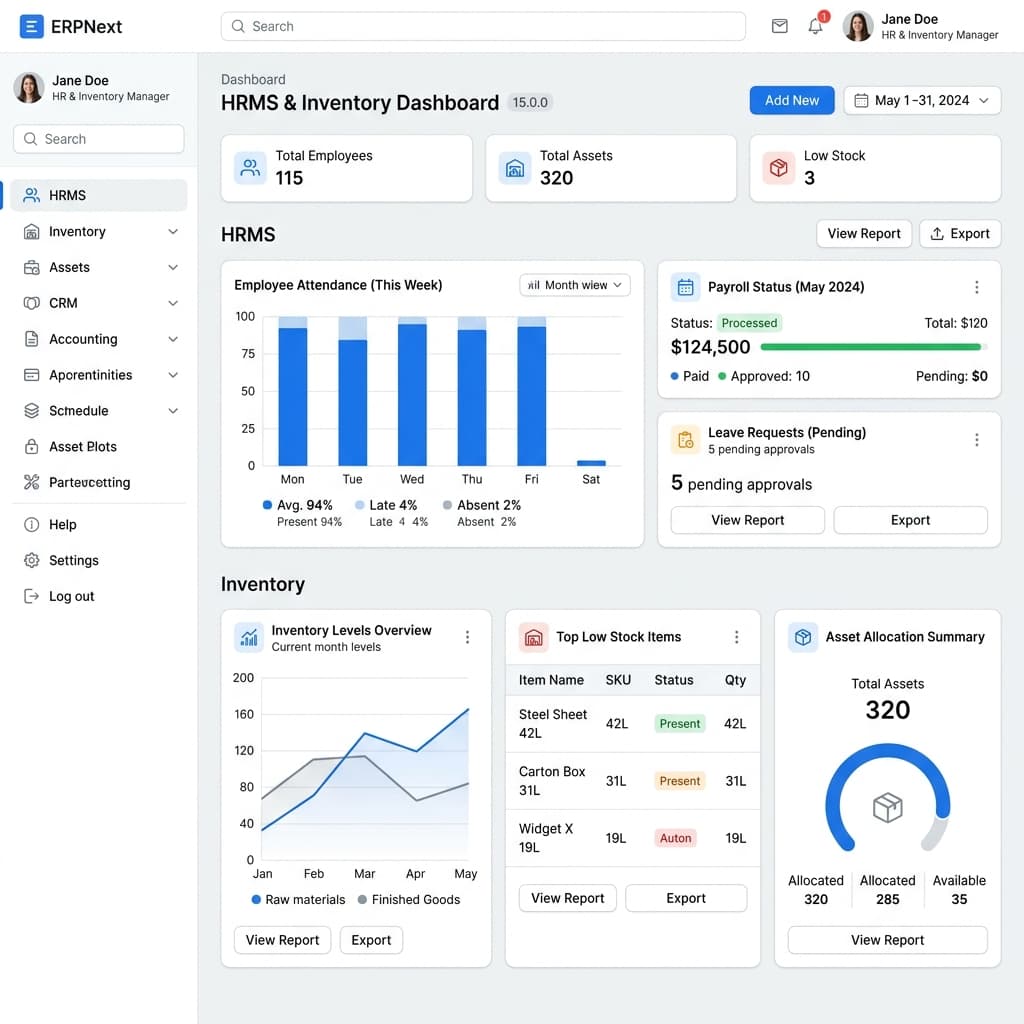 Enterprise Software
A detailed guide on customizing ERPNext to streamline Human Resource Management (HRMS) and Inventory operations. Learn best practices for Frappe, MariaDB, and writing custom server-side scripts.
Read articleExplore other engineering capabilities that complement this service.